Why Did Artists Include Insects in Floral Still Lifes?
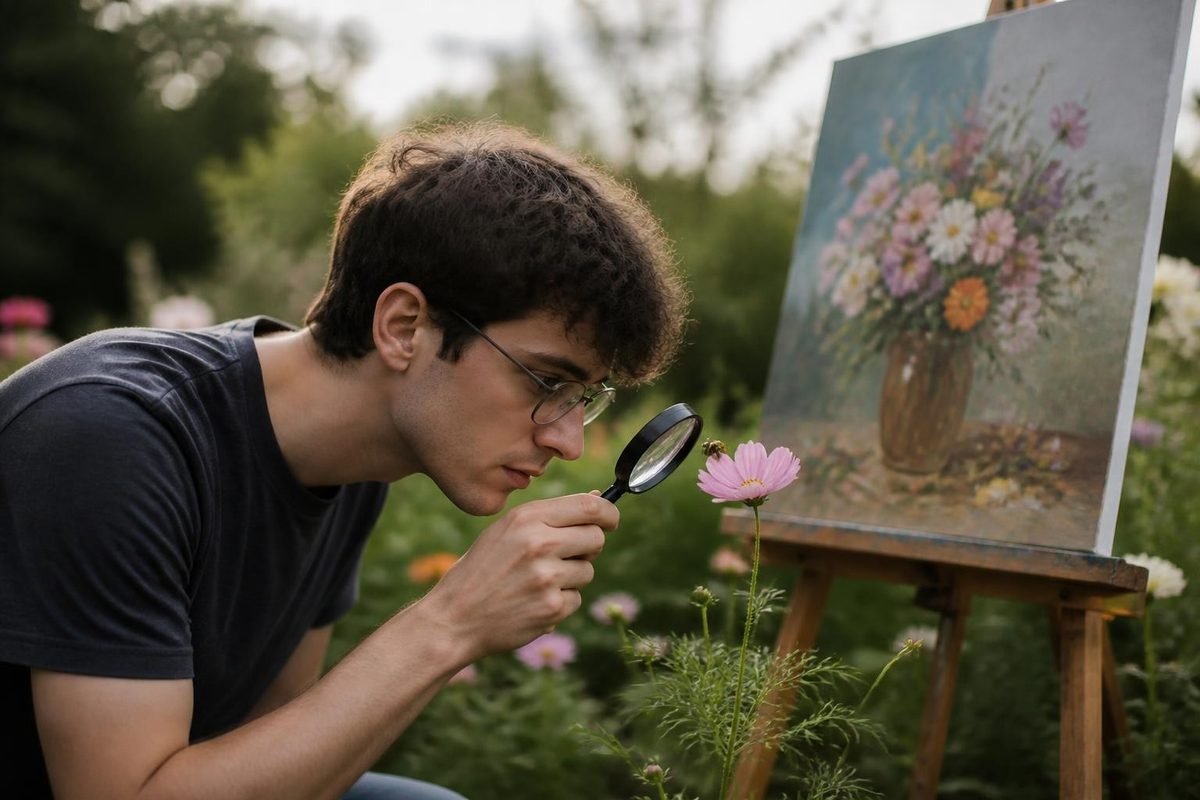
Artists included insects in floral still lifes to make their paintings more convincing and to add layers of meaning. A butterfly, fly, or caterpillar could show close attention to nature, suggest change or decay, and demonstrate a painter's skill.
Insects made painted flowers feel alive
A bouquet in a painting may look carefully arranged, but insects give it a sense of life beyond the vase. A fly resting on a petal or a caterpillar crossing a leaf draws the eye to the surface of the flower. These small creatures also remind us that plants are part of a wider living world.
Many flower painters worked from close observation. In the Netherlands during the seventeenth century, for example, artists studied flowers and insects in detail. Some also used drawings or other visual sources to help them compose their pictures. A single arrangement could bring together flowers that did not bloom at the same time.
Tiny insects gave painters a chance to show how precisely they could work. Translucent wings, glossy beetle shells, and the fine legs of a fly all posed different challenges. An insect painted near the edge of a picture could even seem to sit on the painting itself.
Small creatures could carry larger meanings
Flowers fade, and insects can make that fact hard to miss. A caterpillar eating a leaf or a fly near a damaged bloom may point to the passing of time. In some still lifes, signs of damage sit beside fresh flowers, creating a contrast between beauty and decay.
These details can connect a flower painting to a broader tradition of art that reminds viewers life is temporary. Such works are often called vanitas paintings. Not every insect has that meaning, though. A fly may simply make a scene more lifelike, or give the painter an opportunity to show off a steady hand.
Some insects also had religious associations. A butterfly could suggest transformation and, in a Christian context, resurrection. The meaning depends on the painting and its setting. It is safer to look at the whole picture than to assume that every creature stands for one fixed idea.
Questions about insects in flower paintings
Did every insect have a symbolic meaning?
No. An insect might add realism or display technical skill. Its place in the composition and the other objects around it can help suggest whether it carries another meaning.
Why were flies painted on flowers?
Flies could make flowers look more natural. They could also draw attention to decay, especially when placed near wilting petals or damaged leaves.
What might a butterfly represent?
A butterfly can suggest transformation. In some Christian images, it may also refer to resurrection. It can be a carefully observed detail as well.
Were the bouquets always painted from real arrangements?
Not necessarily. Some painted bouquets combine flowers from different seasons. Artists could use studies and other references to bring them together in one image.
Further reading: here